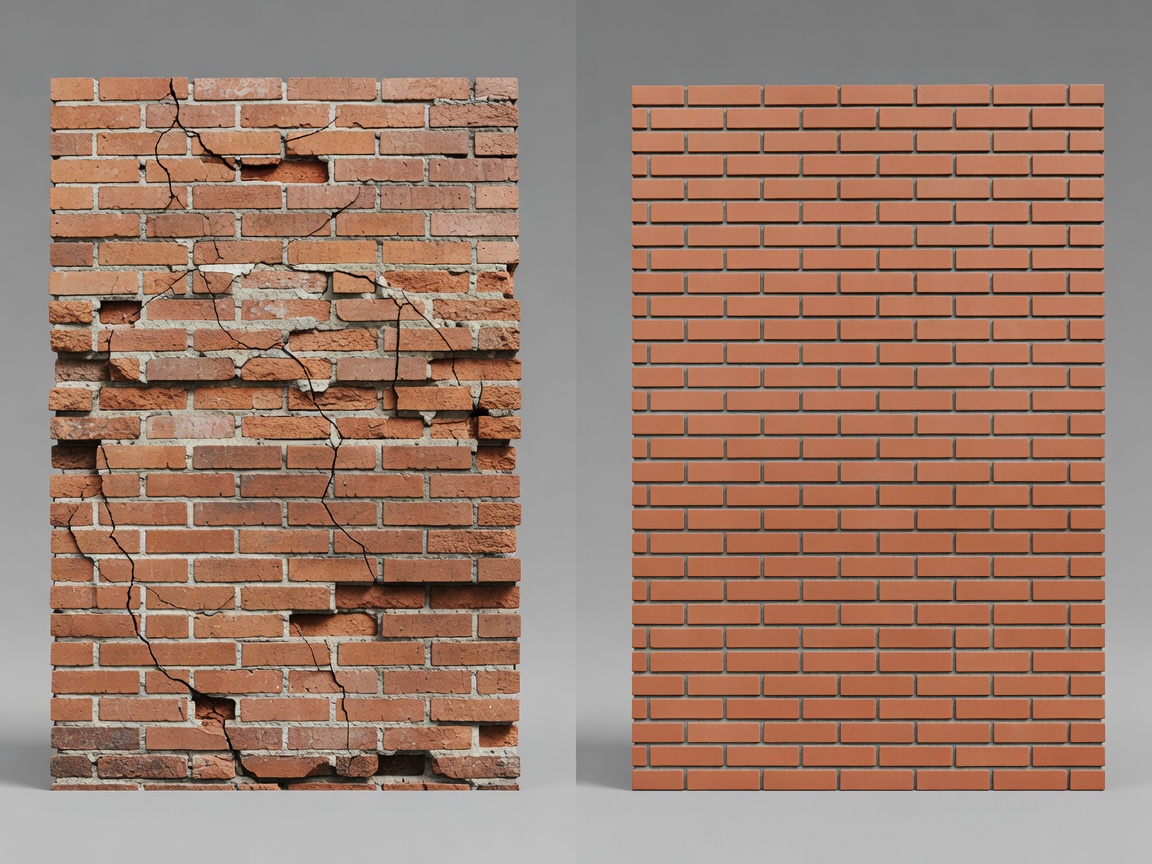
The outermost layer does the heavy lifting
When people say "skin barrier", they usually mean the stratum corneum: the top layer of the epidermis. It is made of roughly fifteen to twenty layers of flattened, no-longer-living cells called corneocytes, and in most places it measures somewhere around ten to twenty micrometres thick. That is very little material to stand between your body and the air, which is why small habits have such a visible effect on it.
In the early 1980s the dermatologist Peter Elias, working at the University of California, San Francisco, described this layer with an image that is still taught today: the brick-and-mortar model. The corneocytes are the bricks. The space between them is filled with an organised mix of lipids, the mortar. Neither works alone. Bricks without mortar leak; mortar without bricks has nothing to hold together.
What the mortar is made of
The lipid mortar is mainly three families of molecules. Ceramides make up roughly half of it by weight. Cholesterol accounts for about a quarter, and free fatty acids for most of the rest. These lipids arrange themselves in tightly stacked sheets, called lamellae, which is what makes the barrier so water-resistant.
Because the three families work as a set, research from the Elias group found that topical products help recovery most when they supply them together in sensible proportions. A ratio of around three parts ceramide to one part cholesterol to one part fatty acid is often cited. You do not need to calculate ratios at home, but it explains why a cream listing ceramides, cholesterol and fatty acids side by side is a reasonable choice.
Water held inside the bricks
Inside each corneocyte sits natural moisturising factor, or NMF: a blend of amino acids, urea, lactic acid salts and similar small molecules that bind water. Much of NMF comes from the breakdown of a protein called filaggrin. People with certain filaggrin gene variations are more prone to dry skin and atopic eczema, which is one reason some skin is simply more reactive than other skin, through no fault of the person who owns it.
A slightly acidic surface
Healthy skin surface pH sits below 5; a frequently quoted study by Lambers and colleagues put the natural average at around 4.7. This mild acidity, sometimes called the acid mantle, helps the enzymes that build lipids and shed old cells work at their best. Washing with high-pH soap nudges the surface towards neutral, and those enzymes slow down. It recovers, but repeated daily nudges add up.
How a wall starts to leak
Scientists measure barrier health partly by transepidermal water loss, or TEWL: the amount of water that passes outwards through the skin. When the mortar is depleted or the bricks are shed too fast, TEWL rises. Skin feels tight, flakes appear, and ingredients that were once tolerated now reach nerve endings more easily and sting.
The common causes are ordinary: hot water, strong cleansers, exfoliating acids used daily, retinoids started too quickly, physical scrubs, cold dry wind, low indoor humidity in winter, and fragrance on skin that is already reactive. None of these is dangerous on its own. The barrier leaks when several land on it at once, for weeks.
The reassuring part. The barrier is designed to repair. After a mild disruption, lipid production speeds up within hours. Your job is mainly to stop adding damage and give it the raw materials, then wait.
What this means for your routine
Three practical conclusions follow from the science. First, remove the things that strip lipids before adding anything new. Second, supply humectants such as glycerin, lipids such as ceramides, and a light occlusive where skin is driest. Third, give it time: the outer layer turns over gradually, and adult epidermal renewal is commonly estimated at four to six weeks. That is why our repair plan runs for four weeks, not four days.
If your skin is cracked, weeping or painful, or if you have a diagnosed condition such as eczema, rosacea or psoriasis, these principles still apply, but please work with a pharmacist, GP or dermatologist. Organisations such as the British Association of Dermatologists and the National Eczema Society publish reliable patient information.